There’s a lot of confusion around sports massage. What most people think of as “massage” has little to do with what actually happens in high-level sports medicine. Sports massage isn’t about relaxation in the textbook sense. It operates under different assumptions, aimed at people who train, compete, and get injured, not people escaping stress or seeking generic deep pressure. The job is to prepare tissue for performance, support post-event recovery, and solve real-world rehab problems. In other words: it’s relentlessly practical, and governed by the feedback loop between tissue health, movement, training load, and adaptation.
This isn’t just useful to Olympians. If you run weekends, play rec league football, or just want to rehab that sneaker-related calf strain, understanding sports massage (and separating it from myths) helps you make better decisions. Here I’ll walk you through what sports massage actually is, what the research says about benefits (including how it affects delayed onset muscle soreness), core techniques like effleurage and myofascial release, how a session is structured, red flags and pitfalls, and how to vet a therapist. Real examples, like what muscle fit Spa does differently, will show that this isn’t just abstractions, but the sum of dozens of real client cases in actual clinics.
Sports Massage vs Deep Tissue Massage vs Physiotherapy: What’s the Essential Difference?
-
Sports massage or sports massage therapy is manual therapy with an agenda. The goal is always functional, enhance performance, speed sports recovery, enable rehabilitation. The therapist deploys a set of specific tools: soft tissue mobilization, myofascial release, petrissage (kneading) and trigger-point work, always tuned to what the athlete actually needs for their chosen sport or rehab stage.
-
Deep tissue massage lives up to its name by going after dense muscle and fascia with slow, sustained pressure. It’s valuable for chronic knots or adhesions, and it can be part of a sports massage, but it doesn’t aim to time your tissue for a pre-race warm-up, or to plug in immediately after an event for acute sports recovery.
-
Physiotherapy sits upstream: it’s clinical, grounded in assessment, functional diagnosis, exercise prescription and a wide toolkit of manual therapy, modalities and reloading. Sports massage may be woven into the mix, but under the umbrella of structured rehab, where progressive loading, movement skills and sometimes taping or dry needling are the norm.
When to Use Which?
-
If you need to restore function right after injury, or you’re rehabbing from surgery: see a physio first, sports massage complements, but doesn’t replace, this process.
-
If you’re prepping for an event or need a short-term feel-better/faster ROM bump: this is classic sports massage territory, especially with lighter effleurage and targeted petrissage.
-
If your restriction runs deep, think chronic tightness, longstanding adhesions, deep tissue work (sometimes inside an advanced sports massage session) is the fix, always hand-in-hand with mobility and strength exercises.
The truth: smart athletes and coaches don’t choose just one path. They blend them, rehab with a physio, maintain with regular sports massage, and add other tools (cupping, trigger point therapy) as needed, always adapted for where they are in the cycle of injury and performance.
What the Science Actually Says: Benefits in Recovery, Rehab, and Delayed Onset Muscle Soreness
Much is said about massage, but the best-supported benefit isn’t “miraculous performance gains”, it’s about small, real improvements in recovery and pain. Sports massage shines as an adjunct, used with training and clinical care. Its most important effects: soft tissue mobilization, focused myofascial work, and neural inputs that ease pain, stimulate circulation and temporarily increase flexibility. Research keeps finding the same thing: you can reliably cut down delayed onset muscle soreness (DOMS), and get short-term improvement in range of motion. Bluntly: massage isn’t magic, but it’s undeniably helpful in the right context. (see a review of proposed uses and mechanisms).
The Most Useful Findings (You Can Act On)
-
DOMS drops: If you receive massage in the hours after exercise (ideally around 3 hours, and again over 24–72 hours), you’ll experience less delayed onset muscle soreness. That’s why smart programs schedule post-event or pre/post workout massage, not just “when there’s time.” (study noting reduced DOMS and flexibility effects).
-
Better rehab, better maintenance: Done regularly and paired with progressive strength work, soft tissue mobilization expedites functional rehabilitation and builds real durability.
-
Pre-event timing: Short (15–45 min), light, low-pressure massage using effleurage and gentle kneading helps warm the tissue, prepping you for performance without stealing power. It’s not about “deeper is better”, it’s about tissue readiness.
-
Adjunct tools: Cupping, percussion, and trigger point massage extend the toolkit, but need clinical judgment, used at the right moment, they’re force multipliers in recovery, not standalone fixes. Note research comparing modalities suggests both massage and cold-water immersion can improve perceptual recovery measures (and cold-water immersion may help jump performance); use the right tool for the goal. (recovery modal comparison).
How Real Clinics Translate Evidence
The most progressive clinics don’t treat massage as a fix-all. They integrate soft tissue mobilization with specific, individualized strength and pain-modulation plans. Sports massage becomes the connective tissue (pun intended) between diagnosis, treatment and the return to sport. That’s how you should view it too. (background on suggested clinical roles).
Core Sports Massage Techniques, Why They Matter, How to Use Them, When to Avoid Them
-
Effleurage: The warmup, and sometimes the cooldown. These long, gliding strokes are the best way to gently stimulate blood flow, get a baseline feel for tissue quality, and prime the athlete for whatever comes next. In a pre-event context, effleurage is how you “wake up” tissue without tiring it out.
-
Petrissage (kneading, wringing, lifting): This is where most of the lasting soft-tissue change comes from. You’re mobilizing muscle, disrupting adhesive tissue, and restoring plasticity. Central for post-event, maintenance, and targeted pain relief.
-
Myofascial release & trigger point: For those intractable, stuck spots and fascial restrictions. Here, pressure and stretch, applied for 30–90 seconds, are the lever that restores movement where nothing else worked.
-
Cupping, percussion (massage guns): These tools amplify traditional effects, by increasing blood flow and/or changing neural tone. They’re especially good for athletes with neuromuscular “guarding” or fascial stickiness. But nuance counts: never use them on fresh injuries, fragile skin, or where bleeding is a risk.
-
Stretching and assisted release: The finishing move, active movement, paired with hands-on release, helps embed gains and transition you back to real training.
Key principle: Techniques are chosen for purpose. For pre-event, lighter work rules. After a brutal workout or injury, deeper work and myofascial release often matter more. Good clinics, like Muscle Fit Spa, match intervention with both science and individual need, a craft, not a formula.
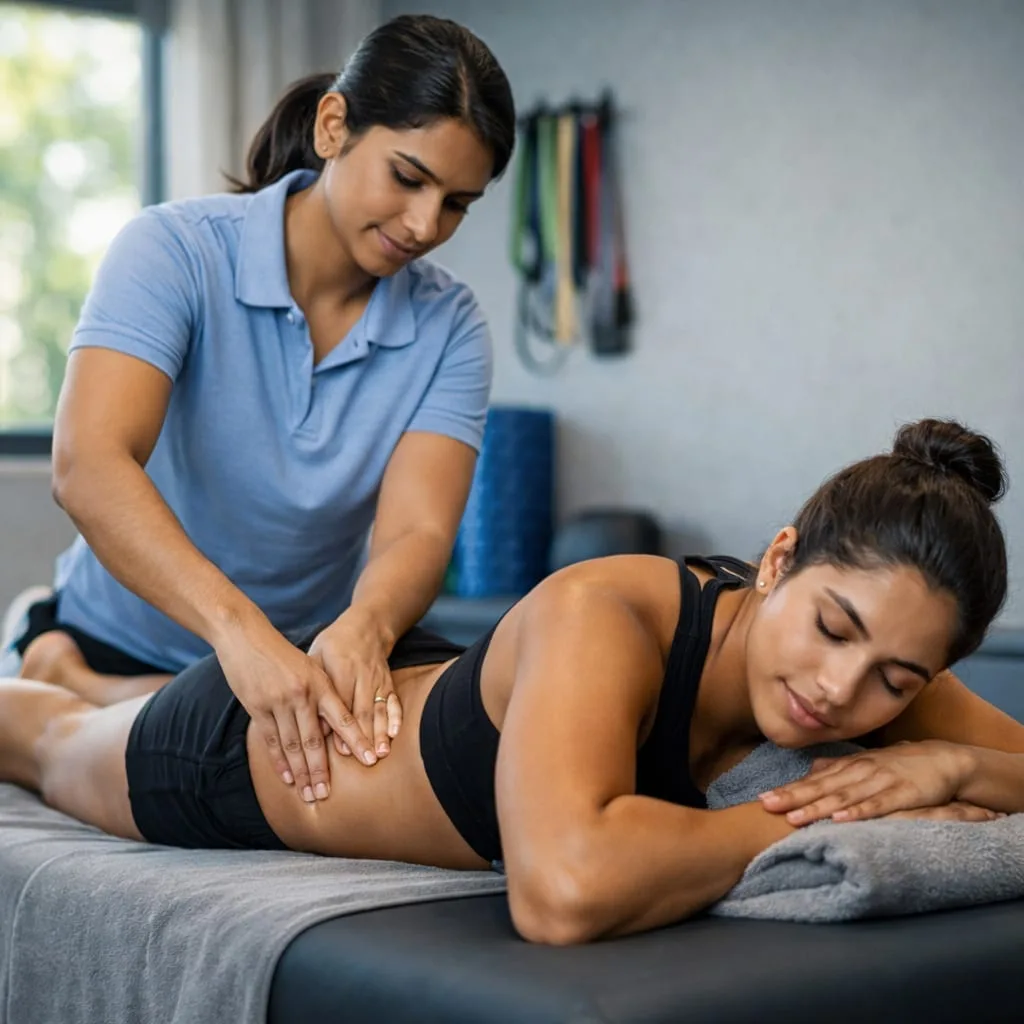
What a Real Sports Massage Session Looks Like
-
Prior: Intake & Screening
-
Session starts with actual due diligence: identifying recent fractures, clots, wounds, or medical risks. Every step connects to a clear goal, rehabilitation, maintenance, competition prep, or true post-event recovery.
-
Quick movement and strength checks help reveal what the body’s really like today. Assessments aren’t generic, they guide which techniques will actually help. For example, muscle fit Spa builds in screening to target the right tissue with the right modalities.
-
-
Pre-Event Flow
- The pre-event goal: boost circulation, turn on neural pathways, avoid fatigue. Massage is shorter (15–45 minutes), lighter, often synchronized to coincide with warm-up routines. Think rapid tissue readiness, not exhaustion.
-
During
- The “main event” is always adaptive. Standard sequence: effleurage to assess and warm → deeper kneading and mobilization as needed → specific work on knots or scar tissue → finish with lighter strokes and stretches. Athlete feedback drives progression and pressure.
-
Post-Event & Aftercare
- Short, focused (15–30 min) routines target priority muscle groups and end with stretch and lymphatic pumping. Top clinics don’t just say “see you next time”: you leave with a home program, foam rolling, light mobility, nutrition tips (protein/carbs within 30–60 minutes), and an explicit warning to seek follow-up with a sports doc if odd symptoms develop.
Who Should (and Shouldn’t) Get Sports Massage? Risks and Real Contraindications
Indications: If you’re coming back from a soft-tissue injury, want to keep tissue healthy to prevent recurrence, need mobility for a sporting goal, or want to dampen DOMS, sports massage is on the table. Perfect for serious athletes, Masters competitors, weekend warriors, and even post-op patients, if it’s part of a bigger, exercise-led plan. Myofascial and trigger-point release are especially powerful when movement’s limited by real restrictions.
Red Flags, When Sports Massage Can Actually Harm
-
Never: Over fractures, suspected or proven clots (DVT), open wounds, active skin infections.
-
The “maybe” list (need clearance): Recent surgery, untreated hypertension, severe osteoporosis, acute inflammation, bleeding disorders/anticoagulants, certain implants or medical devices.
-
Pregnant clients: Need therapists trained for pregnancy massage and physician sign-off for anything beyond basic relaxation.
Risks & Responses: A little soreness post-session is normal, especially after deep work. But if you get sharp, worsening pain, new tingling, severe swelling, fever, or dark urine, stop and seek sports or medical care immediately. The right therapist will always monitor and adapt, all technique, no bravado.
Bottom line: The intake process matters as much as the massage. Adapt pressure and techniques in real-time. If in doubt, refer or cross-check with a physician or physio, it’s a sign of respect, not weakness.
Choosing a Good Sports Massage Therapist: Credentials, Frequency, and The Money Question
What You Need To Know | What to Look For | How to Actually Use This |
Credentials & Training | Licensed, with extra qualifications in sports massage, myofascial therapy, rehab methods. Experience matters as much as paper. | Don’t just check certificates, ask about hands-on cases similar to yours; for instance, at muscle fit Spa, therapists are cross-trained in pain protocols as well as standard sports massage. |
What to Ask When Booking | Specifics: Have they worked with your sport/injury? Do they actually offer adjuncts (trigger-point, cupping, percussion)? | Example: “Do you provide personalized myofascial protocols, like muscle fit Spa? What’s your approach for [insert your sport/injury type]?” |
Session Lengths & Pricing | Choices: 30, 45, 60, or 90 mins; rates vary by city and clinic. | Sample (muscle fit Spa, Bangalore): 90-min Deep Bliss Myofascial Therapy ₹3,700 (walk-in); Platinum weekend ₹2,960; member weekday ₹1,800; targeted 60 mins ~₹2,800, classic Swedish/deep tissue ~₹2,400. Elsewhere in India: 30–45 mins ₹500–1,500, 60–90 mins ₹1,500–4,000, depending on therapist and amenities. |
Frequency, How Often? | Pre-event: one-off short session; Post-event: 15–30 min after activity; Maintenance: every 1–4 weeks depending on load; Rehab: initially 2–3x/week, tapering off as you regain function. | Coordinate with your coach/physio and let the plan adapt to your seasonal load, injury status and feedback. |
Logistics & Preparation | Clothing, paperwork, insurance (rare but worth asking), available packages or add-ons. | Bring comfortable, sport-appropriate clothes. Share medical history, check if insurance is usable, know cancellation policies. Ask about membership and tailored rehab/recovery packages. |
How To Truly Vet Skills
Don’t be shy: ask to see licenses, and dig into therapist experience with sports injuries or protocols (especially if you saw the clinic advertised as a “specialist” like muscle fit Spa). Always confirm who actually delivers the advanced protocols.
Smart Budgeting & Booking
Compare a la carte versus package rates. Check what the session includes, are cupping, percussion and other hands-on tools extra? Know the refund and medical clearance policies for post-injury sessions, so you’re not surprised later.
Checklist (Before You Show Up)
Bring clinic notes if you’ve seen a doctor, wear clothing you can move in, drink water, and always let them know about blood thinners or recent surgery in advance. Good therapists want full context, they can’t improvise well in the dark.
FAQ, Real Athlete Questions, Straight Answers
-
**Why is sports massage different from deep tissue?**Sports massage adapts to your timeline (competition, training, rehab), and combines several techniques: effleurage for warming, petrissage for softening, myofascial and trigger work for stubborn problems. Deep tissue is just one (sometimes overused) tool in this broader set.
-
**When’s the best time to get a sports massage?**Before competition, keep it light and brief (15–45 mins) within a few hours of your event. For recovery and DOMS: book within 30 minutes to a few hours afterward, repeat at 24–72 hours as needed.
-
**How often for optimal recovery or rehab?**Post-training: as needed when you’re sore or tight. Maintenance: every week to month, depending on load. Rehab: follow your clinician, several times a week initially, tapering as you recover.
-
**Does massage reduce DOMS (delayed muscle soreness)?**Yes. Multiple studies and clinics confirm 20–30 min sessions a few hours post-exercise, and again at 2–3 days, lessen soreness and perceived recovery time. (study showing reduced DOMS/flexibility effects).
-
**Is sports massage safe after surgery/injury?**Done right, with medical clearance, yes, except over open wounds, unstable fractures, infection, or DVT risk. Always coordinate with your medical provider.
-
**What certifications matter for therapists?**Look for formal licensing, plus advanced coursework in sports/myofascial/rehab techniques. Reputable clinics (like muscle fit spa) hire for these extra skills and protocols.
-
**Session lengths and costs?**Typical: 30–90 minutes; costs depend on region and expertise. For example, 90-min advanced sessions at ₹3,700 at muscle fit spa, targeted 60-min at ~₹2,800; classic deep tissue from ₹2,400.
-
**Does sports massage clear up performance, or is that overrated?**Massage objectively helps movement and short-term recovery. Direct performance improvements are modest, think 1%ers. Use it to smooth the path for training, not as a shortcut to winning medals.
Final Takeaway: Make Massage Work for Your Performance
Sports massage isn’t mysticism, and it’s not just “deep work”, it’s a real, adaptive tool tuned to the demands of athletes and active people. When delivered by a craftsman, someone who understands tissue, progression, and context, it becomes one of several levers in the sports medicine toolkit. Use it to enhance rehabilitation, minimize delayed onset muscle soreness, boost range of motion, and put your training and recovery on firmer ground. Be clear about your goals, insist on qualified hands, and always treat massage as one piece of the greater puzzle, never a total solution in itself.
Tactical advice: Demand experience from your therapist, ask specifically about your sport or injury. Schedule short pre-event sessions to prime muscles, 15–30 min post-event for recovery, and build regular sessions during hard spells of training. When evaluating clinics, prioritize ones (such as muscle fit spa) that offer individualized myofascial and pain-relief plans, not just rote routines.